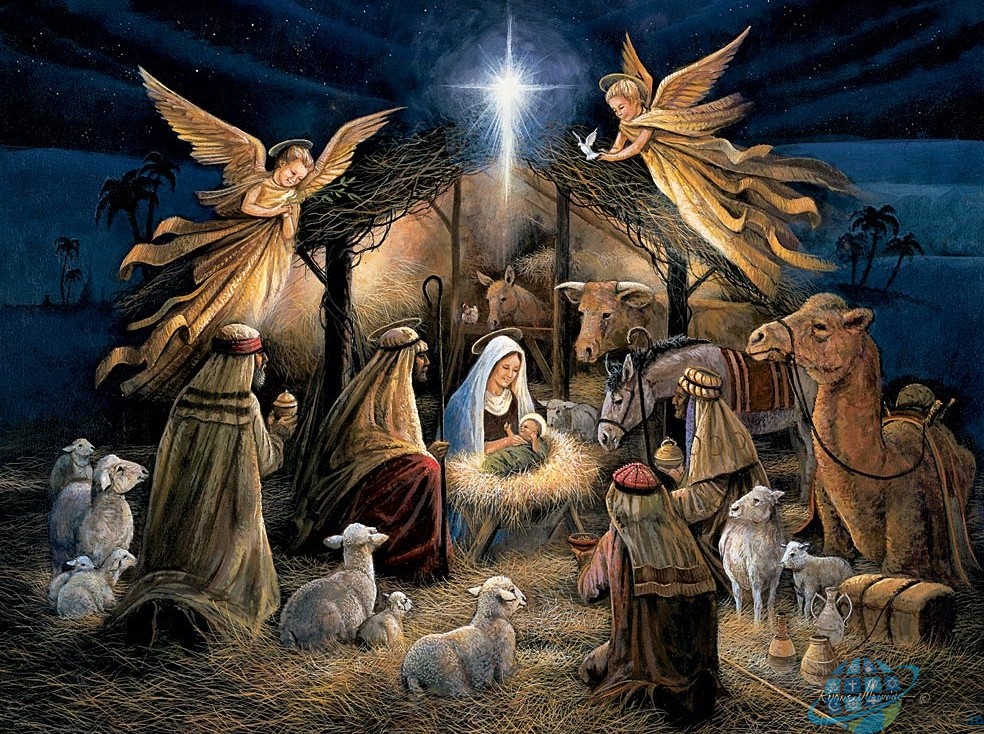
We were taught as children that Christmas is a celebration of the birth of Jesus Christ. I’ve often wondered: What connection is there between His birth Christmas lights, and presents? Some would respond that the presents represent the gifts the wise men brought, and the light represents the star that guided them. Alright, what about the trees and santa? Well, let’s get started.
Christmas has its roots in both pagan and Roman cultures. In reality, there were two holidays observed by the Romans in December. The first was a two-week festival called Saturnalia, dedicated to their deity of agriculture, Saturn. They commemorated the birth of their sun god, Mithra, on December 25. These were wild, inebriated gatherings for both occasions.
The pagan cultures also lit torches and bonfires in December, the darkest day of the year, to ward against the darkness. This custom was also adapted by the Romans into their own festivities.
The Christian church failed to put an end to the pagan rituals and customs as Christianity spread throughout Europe. They transformed the heathen rite into a birthday celebration for Jesus because no one knew His exact birthdate.
The pagans used the solstice ceremonies to decorate their homes with greenery in preparation for the arrival of spring. Evergreen trees were believed to possess unique abilities since they maintained their green color even on the coldest and darkest days. During Saturnalia, the Romans also adorned their temples with metal fragments and fir trees. Greeks are known to have decorated trees in remembrance of their gods. It’s interesting to note that the earliest trees brought into the pagan homes were upside-down and hung from the ceiling.
The tree customs that we are familiar with today originated in Northern Europe, where evergreen trees were adorned with candles and dried fruit by Germanic pagan tribes as a form of adoration for the god Woden. In Germany, the custom was assimilated into the Christian faith in the 1500s. They used toys, lights, and candies to decorate trees in their houses.
Regarding Santa Claus
This Christmas custom, which was inspired by St. Nicholas, has more Christian than pagan origins. He was a bishop in the early Christian church, born in southern Turkey in the year 280, and he endured persecution and incarceration as a result of his religious beliefs. Despite coming from an affluent background, he was well known for his kindness to the underprivileged and marginalized. There are several stories about him, but the most well-known is the one of how he prevented the sale of his three daughters into slavery.
It was their father’s final option because there was no dowry to persuade a man to marry them. It is supposed that St. Nicholas rescued them from their fate by tossing riches through an open window into the house. Children began hanging stockings by their fires in the hopes that St. Nicholas would drop gifts into them after a legend states that gold fell into a sock that was drying by the fire.
December 6th was designated as St. Nicholas Day in remembrance of his passing. Over time, St. Nicholas was adopted into the traditions of every European civilization. Christkind, also known as Kris Kringle in German and Swiss traditions, was St. Nicholas’s escort when he brought gifts to well-behaved kids.
In Sweden, Jultomten was a content elf who rode in a sleigh pulled by goats to bring gifts. Then there was Pere Noel in France and Father Christmas in England. He was called Sinter Klaas in the Netherlands, Belgium, Luxembourg, Lorraine, France, and some parts of Germany. For the record, the name Nicholas is reduced to Klaas. This is the origin of the Americanized Santa Claus.



 Lifestyle Insight Magazine
Leave a comment